Let's Talk Red Light Therapy
- Jun 15
- 7 min read
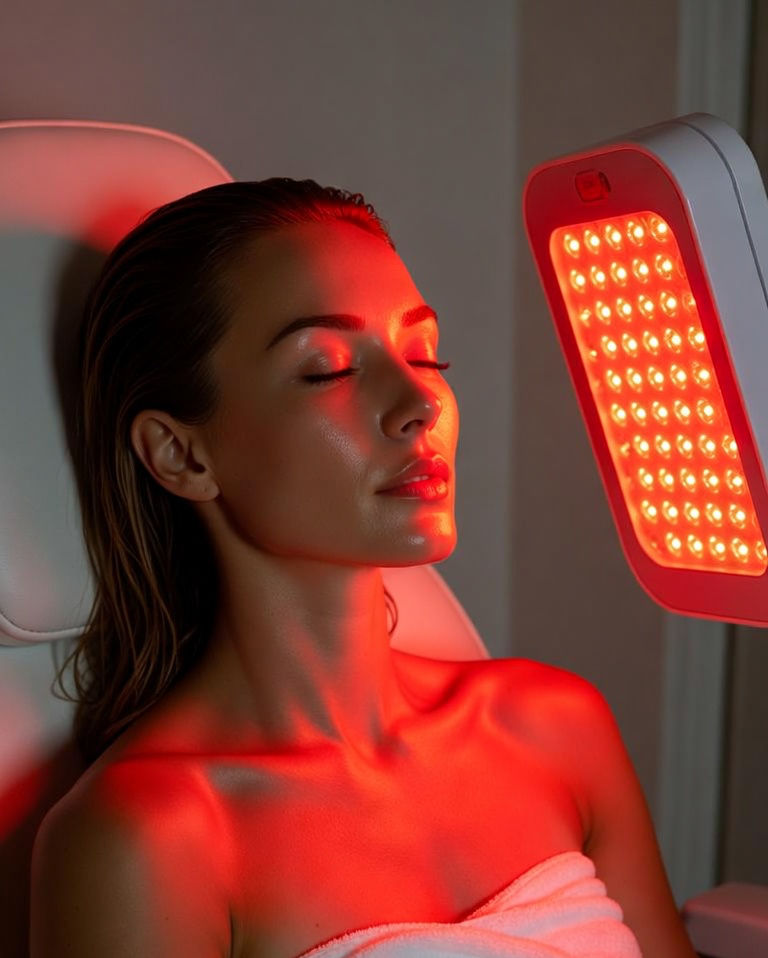
Your cells have been waiting for this.
A wavelength-level reset that rebuilds collagen,
wakes up dormant follicles,
and rewires how your body makes energy — without a single hormone disrupted.
THE SCIENCE
What actually happens inside your cells
Red light therapy — also known as photobiomodulation (PBM) or low-level laser therapy (LLLT) — is one of the most well-researched tools in modern wellness. It works by delivering specific wavelengths of red and near-infrared light to your skin and tissue, where they are absorbed by a molecule called cytochrome c oxidase, a key enzyme in your mitochondria.
When that enzyme absorbs the light, it triggers a cascade: your mitochondria produce more ATP (adenosine triphosphate), the primary energy currency of the cell. More ATP means cells can repair faster, regenerate more efficiently, and function at a higher baseline. Think of it as charging your cellular battery.
"Red light does not burn, heat, or damage tissue. It works with your biology — not against it. That is precisely what makes it compatible with every phase of your cycle."
Beyond energy production, photobiomodulation has been shown to reduce oxidative stress, modulate inflammation, stimulate collagen and elastin synthesis, improve local circulation, and activate stem cells in hair follicles. These effects are cumulative: consistent use over weeks and months is where the real results compound.
630 – 680 nm
VISIBLE RED LIGHT
Penetrates the skin's surface layers. Optimal for collagen synthesis, wound healing, acne reduction, and superficial skin rejuvenation.
810 – 850 nm
NEAR-INFRARED LIGHT
Invisible to the naked eye. Penetrates deeper — reaching muscle, joints, and bone. Used for recovery, pain relief, and systemic effects.
Is it safe?
Red light therapy uses non-ionizing radiation at low irradiance levels. It does not produce UV rays and does not damage DNA. Thousands of peer-reviewed studies support its safety profile. It is considered safe during pregnancy by most practitioners, though consulting your doctor is always recommended. It is also one of the few wellness tools that works synergistically with hormonal health — it does not suppress melatonin, does not disrupt the HPA axis, and can actively support mitochondrial function during phases of the cycle where energy tends to drop.
SKIN
Anti-aging without the compromise
Collagen is the protein that keeps skin firm, plump, and resilient. From your mid-twenties onward, your body produces approximately 1% less collagen per year. Red light therapy directly counteracts this decline by stimulating fibroblast activity — the cells responsible for collagen and elastin production.
Clinical studies show that consistent use of red light at 630–680 nm can significantly increase collagen density, reduce the depth of fine lines, improve skin tone uniformity, and accelerate healing from inflammation or breakouts. For those dealing with hormonal acne — especially tied to the luteal phase — the anti-inflammatory action of red light offers a non-chemical, non-drying alternative that respects the skin barrier.
For best results on skin, a red light face maskor a panel positioned close to the face delivers the most consistent irradiance dose. Ten minutes daily, clean skin, no SPF or thick serums blocking absorption.
HAIR
The hair growth protocol your dermatologist might not have mentioned
Hair loss — especially the diffuse shedding linked to hormonal shifts, postpartum recovery, thyroid dysregulation, or chronic stress — is one of red light's most compelling applications. The mechanism: low-level laser or LED light at 650–670 nm stimulates follicles in the telogen (resting) phase to shift back into the anagen (growth) phase.
The FDA has cleared multiple red light devices specifically for hair growth in androgenetic alopecia. Research also shows improved hair density, diameter, and tensile strength in participants using laser caps, helmets, and combs consistently over 12–26 weeks.
This is a slow game. Hair follicle cycling takes time. But unlike topical treatments that create dependency, photobiomodulation works with your biology and can be discontinued without rebound.
FULL SPECTRUM BENEFITS
13 evidence-backed reasons to make this part of your routine
✦
Collagen Synthesis
Activates fibroblasts to produce more collagen and elastin, improving skin firmness, density, and the depth of fine lines over time.
✦
Hair Follicle Activation
Shifts dormant follicles from telogen to anagen phase. FDA-cleared for androgenetic alopecia. Effective for hormonal and postpartum hair loss.
✦
Cellular Energy (ATP)
Boosts mitochondrial ATP output — giving every cell in the treated area more energy to repair, regenerate, and function optimally.
✦
Inflammation Reduction
Modulates inflammatory cytokines without suppressing immune function. Useful for acne, redness, joint pain, and post-workout recovery.
✦
Skin Tone & Texture
Reduces hyperpigmentation, evens skin tone, and accelerates the turnover of damaged surface cells for smoother, more uniform complexion.
✦
Wound & Scar Healing
Accelerates tissue repair after breakouts, procedures, or injury. Reduces scar formation by optimizing the inflammatory phase of healing.
✦
Muscle Recovery
Near-infrared penetrates deep into muscle tissue, reducing DOMS (delayed onset muscle soreness) and improving post-training recovery speed.
✦
Hormonal Balance Support
Supports thyroid function (via direct neck irradiation in research settings) and mitochondrial health linked to estrogen metabolism and adrenal output.
✦
Mood & Cortisol
Emerging research links transcranial near-infrared light to improved mood, cognitive function, and reduced cortisol response in high-stress profiles.
✦
Sleep Quality
Unlike blue light, red wavelengths do not suppress melatonin. Evening exposure may support circadian regulation and improve sleep onset.
✦
Joint & Chronic Pain
Deep-tissue NIR targets inflammation at the joint level. Used clinically for arthritis, tendinopathy, and cycle-related pelvic pain management.
✦
Acne & Sebum Regulation
Combination red (anti-inflammatory) and blue light (antibacterial) protocols are among the most effective non-pharmaceutical acne interventions available.
✦
Circulation & Lymphatics
Stimulates nitric oxide release, improving local blood flow and lymphatic drainage — contributing to reduced puffiness, better nutrient delivery, and detox support.
THE DEVICES
Which product is right for your goals
Red light therapy comes in multiple form factors. Each one is engineered for a specific use case, treatment area, and lifestyle. Here is how to think about them.
▦
FULL BODY
Red Light Panel
The most versatile and powerful option. Large panels (24"–48") deliver high irradiance across the full body or large treatment zones in a single session. The gold standard for systemic benefits.
Best for Full body, recovery, hormones
Wavelengths 660 nm + 850 nm (combo)
Session 10–20 min daily
Distance 6–18 inches from skin
⬡
FACE
LED Face Mask
A hands-free LED mask worn directly on the face for 10–20 minutes. Delivers concentrated red and near-infrared light at a consistent, calibrated distance — the most efficient device for skin anti-aging.
Best for Collagen, acne, anti-aging
Wavelengths 630 nm / 830 nm + blue 415 nm
Session 10–20 min, 3–5x per week
Results Visible from week 4–6
◈
TARGETED
Handheld Device
A portable, spot-treatment tool for precise application — ideal for acne spots, small scars, joint pain, or facial zones. Travel-friendly and highly versatile for targeted sessions.
Best for Spot treatment, travel
Wavelengths 630–660 nm
Session 3–5 min per zone
Portability Full travel-ready
⬠
HAIR GROWTH
Laser Cap / Helmet
Specifically engineered for scalp irradiation. Worn like a cap or helmet, it delivers 650–670 nm light directly to the follicles. FDA-cleared for hair loss. The most consistent tool for diffuse thinning and hormonal shedding.
Best for Hair regrowth, hormonal loss
Wavelengths 650–670 nm
Session 25–30 min, every other day
Timeline 12–26 weeks for results
◎
EYES & FACE
Wand & Eye Device
Targeted wands deliver gentle red light to the eye area — addressing dark circles, puffiness, and crow's feet. Some models also work across the full face with slow sweeping motions for a spa-like ritual.
Best for Dark circles, puffiness, eye area
Wavelengths 630 nm / 830 nm
Session 3–5 min per zone
Notes Never look directly at LEDs
⬬
BODY & CYCLE
Flexible LED Belt / Wrap
Wearable light therapy wraps around specific body areas — abdomen, lower back, knees, shoulders. Particularly relevant for cycle syncing: applying NIR light to the pelvic area during the luteal phase to support circulation and reduce cramps.
Best for Pelvic pain, joints, recovery
Wavelengths 850 nm NIR primarily
Session 15–20 min per area
Cycle use Luteal + menstrual phase
HOW TO USE IT
The GYN protocol:
syncing light to your cycle
Red light therapy is a tool that compounds. Its effects are not immediate — they are cumulative, building week after week as your cells rebuild, regenerate, and restore. Here is how to integrate it intelligently across your cycle phases.
Menstrual Phase (Days 1–5)
LED belt on lower abdomen for cramp relief
NIR 850 nm on pelvic area 15–20 min
Face mask if skin is reactive — anti-inflammatory action
Avoid over-stimulation: short sessions are enough
Follicular Phase (Days 6–13)
Full panel session 10–20 min daily
Face mask 3–4x per week for collagen
Laser cap every other day for hair growth
Highest cellular responsiveness — maximise exposure
Ovulatory Phase (Days 14–16)
Maintain daily panel or face mask
Handheld for any targeted skin concerns
Prioritise muscle recovery after training
Energy is high — layer with other biohacks
Luteal Phase (Days 17–28)
LED belt on abdomen for PMS circulation support
Red light for luteal acne: daily mask use
Evening sessions to support sleep quality
Reduce session intensity if high sensitivity
General rules: Always start with clean, product-free skin for facial devices. Protect your eyes or keep them closed during panel sessions — especially near-infrared, which is invisible. Begin with shorter sessions (5–10 min) and build up. Consistency over 8–12 weeks is what produces lasting results.
This is not a trend. It is a tool.
Red light therapy has been studied in thousands of peer-reviewed trials. Dermatologists use it. Sports medicine clinicians use it. It is one of the few wellness technologies that has crossed from clinical settings into home devices without losing its evidence base.
For women specifically — navigating hormonal fluctuations that affect skin, hair, energy, mood, and pain levels across a four-week cycle — having a tool that works with your biology rather than overriding it is genuinely rare. Red light does not spike cortisol. It does not disrupt the endocrine system. It does not require a prescription. It asks for ten minutes of your time, consistently, over weeks.
"The women who get the best results from red light therapy are not the ones who use it once and expect a miracle. They are the ones who build it into a morning ritual and let the biology do what biology does: compound over time."
Whether you start with a face mask, a full panel, or a laser cap for hair growth — start. The science is there. The products are accessible. And your cells, as it turns out, have been waiting for the light.
GYN
This article is for educational purposes and does not constitute medical advice. Always consult your healthcare provider before beginning any new wellness protocol. Affiliate products are independently curated by GYN.



Comments